

Netherlands · Founded 2016
Dutch & Dutch logo

Dutch & Dutch

The future of loudspeakers

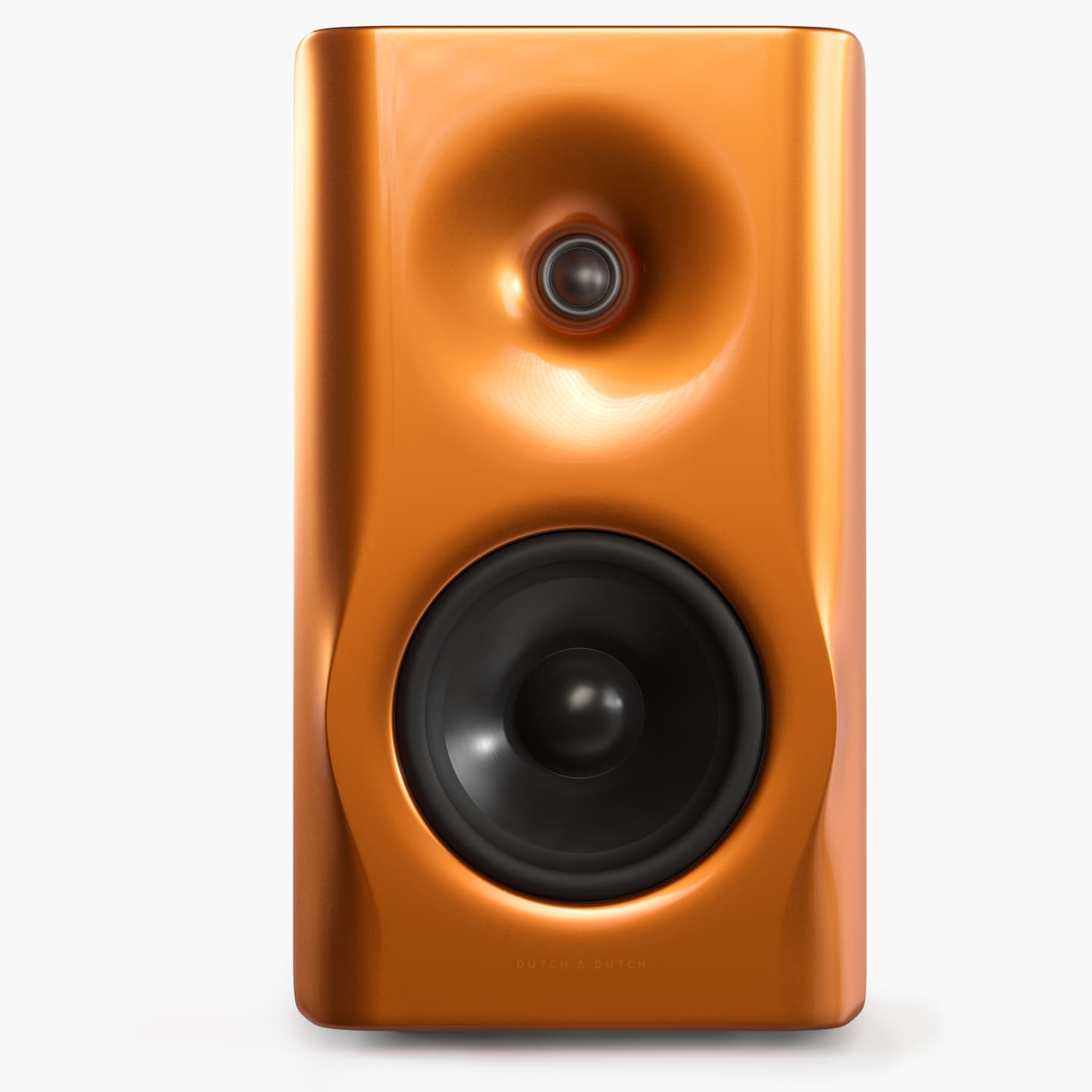
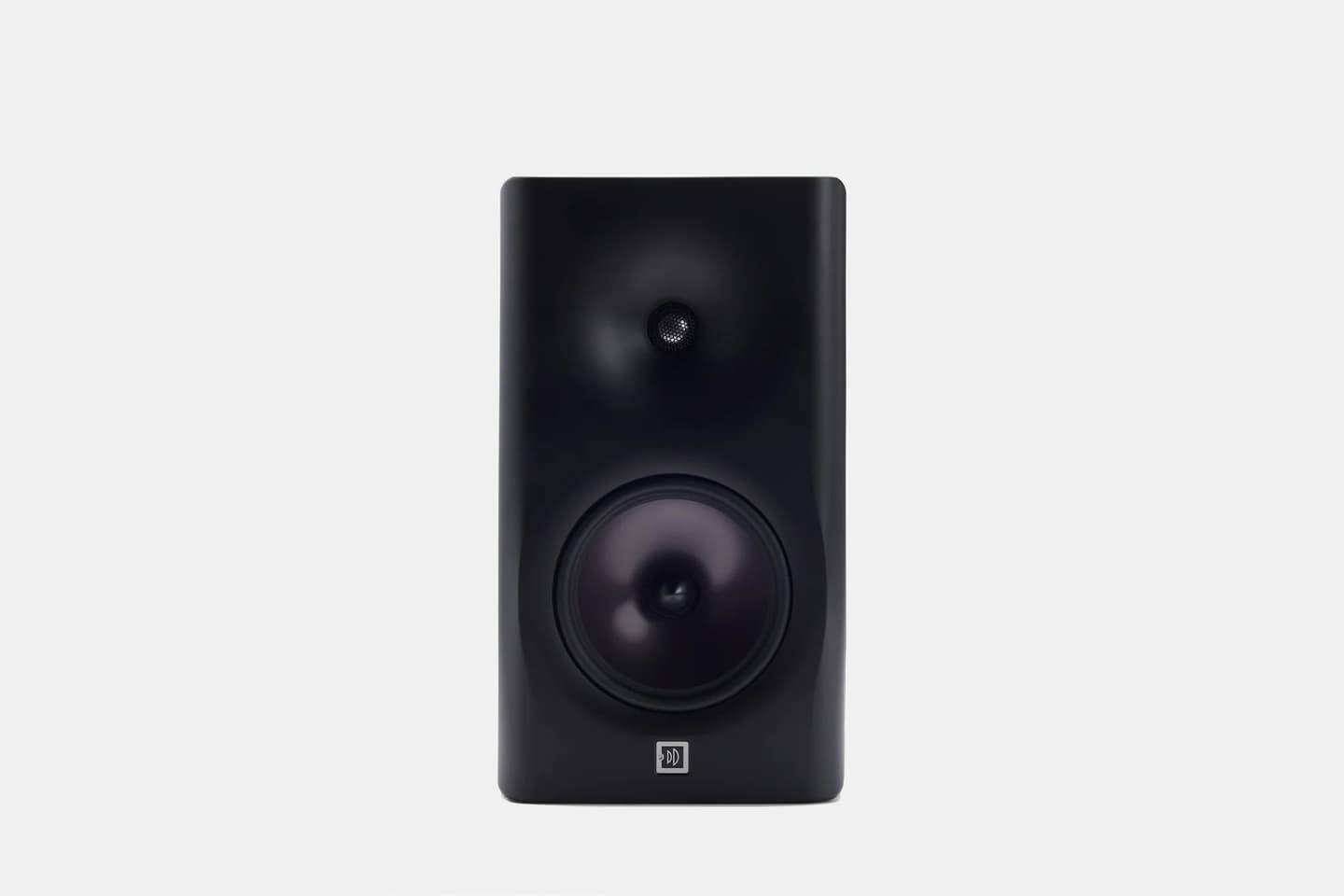
Dutch & Dutch builds active loudspeakers that work with your room instead of fighting it. Amplifiers, streaming and room correction are built in, so there is no separate amplifier or streamer to buy. The 8c is the reference; the 6c brings the same approach to smaller rooms.

dutchdutch.com ↗

Home loudspeakers

Streaming, amplification and room correction built in. Connect them to your network and play.

Compare models

Compare models8c6c
PriceCHF 13'990 per pairFrom CHF 8'890 per pair
Bass drivers2 × 8" aluminium cones1 × 8" aluminium cone, rear-firing
Frequency response20 Hz - 20 kHz50 Hz - 20 kHz ±1 dB (30 Hz at −6 dB)
AmplificationClass D - LF 500W, MF 250W, HF 250WClass D, 600 W per speaker
StreamingEthernet: Roon Ready, Spotify ConnectEthernet or Wi-Fi: Roon Ready, Spotify Connect
Dimensions (H × W × D)485 × 270 × 380 mm380 × 220 × 308 mm
Weight26 kg per speaker14 kg per speaker

Studio monitors

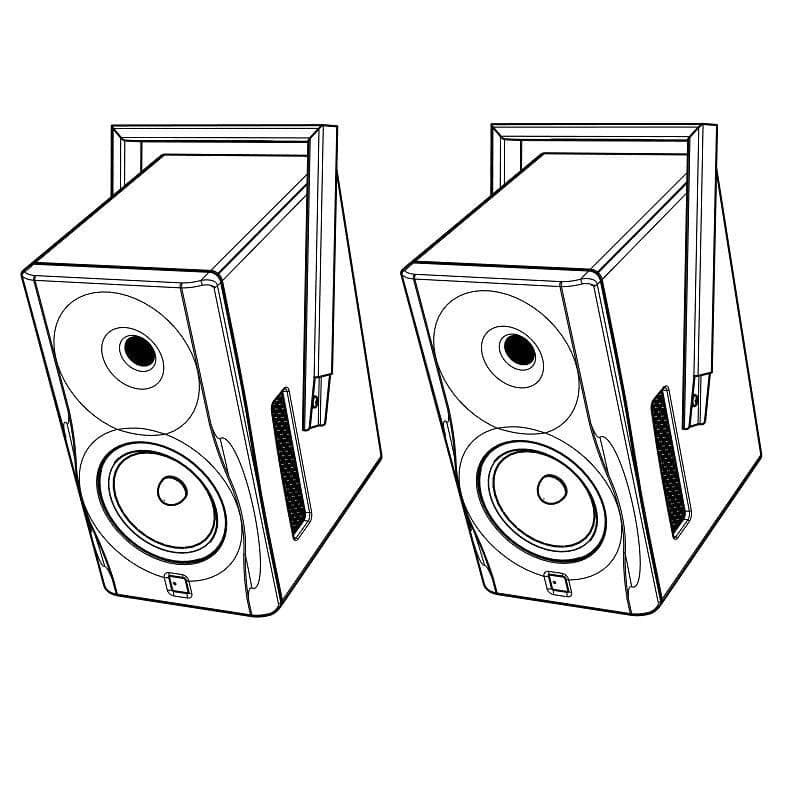
The 8c for control rooms: the same drivers and amplification, without streaming, ready for bracket mounting.

Why Dutch & Dutch

  • Cardioid midrange and boundary-coupled bass: the speakers can sit close to the wall without boomy bass.
  • Bass down to 20 Hz from the 8c, with no subwoofer to buy, place or integrate.
  • RoomMatching adapts the sound to your room and listening position.
  • Amplifiers and streaming built in: Roon Ready and Spotify Connect, controlled from an app.

Hear it before you decide

Two ways to listen, both by appointment.

Showroom in Lutry

A free 60-90 minute listening session with your own music, in a quiet listening room rather than a shop.

In your own room

Setup and listening at your place: CHF 550 per visit in the greater Lausanne region, credited in full if you buy speakers.

01 — Omnidirectional radiation

The problem with conventional speakers

Imagine listening to a concert recording in your living room. A traditional loudspeaker radiates bass in all directions - like a bare light bulb. These reflections layer your room's own acoustic signature over the recording venue's. Standing waves, comb filtering, and muddy bass - you're hearing two rooms at once.

02 — Directional by design

Acoustic cardioid dispersion

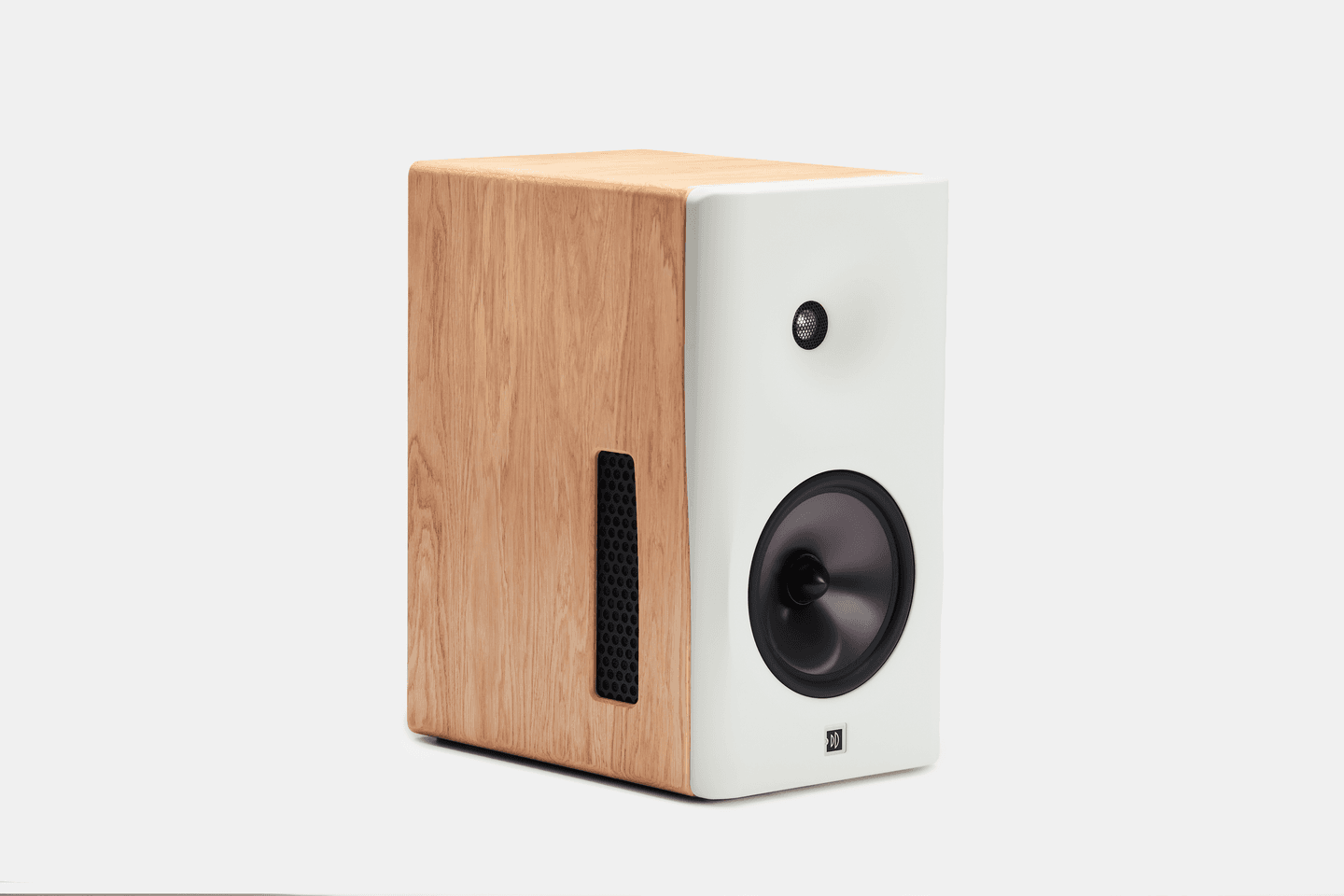
The 8c eliminates your room from the equation. Using the back-wave of its midrange driver and side cabinet vents, it creates a cardioid radiation pattern - sound is focused forward while rear energy is acoustically cancelled. The back wall virtually disappears. You hear the concert hall, not your living room.

03 — The wall becomes an ally

Boundary-coupled bass

Twin rear-firing woofers couple with the wall behind them. This gives the 8c three major advantages: no destructive interference between direct and reflected bass, +6 dB of dynamic headroom (the wall does real work), and directivity that matches the cardioid midrange. Place it just 10-50 cm from a solid, rigid wall - the closer, the better. Note: BCB requires a solid wall to function as designed.

04 — Controlled from 100 Hz up

Constant directivity waveguide

From 100 Hz upward, a proprietary waveguide ensures the tweeter's dispersion matches the midrange driver. The result is consistent frequency response across a wide listening area - the same tonal balance whether you're in the sweet spot or off to the side. No hot seat, no dead zones.

05 — Acoustics first, DSP second

RoomMatching

Acoustics first, then digital refinement. After solving room interaction by design, the built-in DSP handles what physics cannot: room EQ based on actual measurements, boundary compensation tuned to your exact wall distances, and parametric filters - all configurable from the companion app. The result is measurable and audible.

06 — Studio accuracy, any room

The result

Frequency response from 20 Hz upward. Constant directivity from 100 Hz. Full range at 106 dB continuous. In any room, close to any wall. What you hear is what was recorded - nothing added, nothing left out. The speaker disappears; the music remains.

REAR WALLFRONT10-50 cm5.4 m4.4 mROOM EQ20 Hz20 kHztargetminimalminimalSpeakerSpeaker8c8clistener

The technology in depth

01

Cardioid dispersion: making the room disappear

Imagine an orchestra playing in a famous concert hall. The acoustics of that hall - its reverb, its warmth, its sense of space - are integral to the recording. Now play that recording through conventional speakers in your living room: your room's own reflections layer on top of the concert hall's acoustics. You end up hearing two rooms at once.

The 8c solves this at the source. Side-mounted vents use the back-wave energy from the midrange driver to create an acoustic cardioid pattern - sound radiates forward while rear and side energy is cancelled. The back wall effectively disappears as a source of reflections. You hear the concert hall, not your living room.

Normally, this approach would introduce phase and frequency response problems. Dutch & Dutch's internal DSP corrects for these in real time, preserving a flat, accurate response. This technique is well-known in professional audio, but implementing it in a domestic loudspeaker at this level of refinement is extremely rare.

02

Boundary Coupled Bass: the wall as an acoustic partner

Most speakers are designed to be placed away from walls. The 8c does the opposite: its twin rear-firing woofers are engineered to couple with the wall behind them. This design, inspired by the pioneering work of loudspeaker designer Roy Allison, turns what is normally a problem - bass reflections from nearby boundaries - into an advantage.

Boundary Coupled Bass provides three key benefits. First, it eliminates destructive interference between direct bass and reflected bass, which plagues conventional speakers near walls. Second, the wall reinforcement adds up to 6 dB of dynamic headroom - real, usable output gained from physics, not from bigger amplifiers. Third, the increased directivity in the bass matches the cardioid midrange above 100 Hz, ensuring consistent dispersion across the full frequency range.

For BCB to work as designed, the 8c needs a solid, rigid wall behind it - concrete, brick, or dense construction. Place it 10 to 50 cm from that wall, and the speaker and boundary combine into a single, phase-coherent source. The built-in distance presets handle the rest.

03

Constant directivity waveguide

From 100 Hz upward, a proprietary waveguide matches the tweeter's dispersion pattern to the midrange driver's. This means the same tonal balance reaches you whether you're sitting in the sweet spot, leaning to one side, or standing up. There's no hot seat and no dead zones - just a wide, consistent listening area.

This directivity matching is key to how the 8c sounds in real rooms. When the speaker's off-axis response is smooth and controlled, room reflections carry the same tonal character as the direct sound. The result is a natural, spacious presentation that doesn't collapse or change character as you move.

04

RoomMatching: acoustics first, DSP second

After solving room interaction through acoustic design, the 8c's built-in DSP handles the fine-tuning that physics alone cannot. RoomMatching includes boundary compensation calibrated to your exact wall distances, room EQ based on actual measurements, and a full parametric equalizer - all configurable from the companion app or web interface.

This is where tools like REW (Room EQ Wizard) come in. During professional setup, I measure your room's response and feed the results into the 8c's DSP. The speaker adapts to your specific environment - not with generic presets, but with precise corrections based on real data. The result is measurable and audible: flat response from 20 Hz, in your room, with your placement.

What the press says

“Track after track simply reinforced the 8c's abilities and I concluded they were the most accurate transducers, at any price, to pass through my hands.”

Trevor ButlerThe Ear, 2024

“There's no tonal coloration to speak of, and imaging is gratifyingly precise. An exceptional speaker, an exceptional value.”

The Absolute Sound, 2025

“The D&D 8c demonstrates that active, DSP-empowered speakers are the future.”

Kalman RubinsonStereophile, 2019
Dutch & Dutch 8c: all reviews and awards →

Common questions

Experience D&D

Book a demonstration and hear what makes them special.