Why Active Speakers? The Case for Built-In Amplification
Active speakers integrate amplification, crossovers, and DSP into a single enclosure - delivering precision that separates simply can't match. Here's why the best studios and discerning listeners have made the switch.
Paul Callens
Founder, Callens Audio Labs
Walk into any world-class recording studio, mastering suite, or broadcast facility, and you'll almost certainly find active speakers. These aren't passive loudspeakers paired with a rack-mounted power amp - they're self-contained systems where amplifiers, crossover networks, and increasingly sophisticated digital signal processing live inside the same enclosure as the drivers. It's the approach that professional audio adopted decades ago, and it's now transforming the way discerning listeners experience music at home.
But what exactly makes active speakers different from their passive counterparts, and why does it matter? The answer goes deeper than convenience - it touches on fundamental principles of electro-acoustic engineering that directly affect what you hear.
Active vs. Passive: More Than Just a Built-In Amp
At first glance, an active speaker might seem like a passive speaker with an amplifier bolted on. In reality, the architecture is fundamentally different - and the difference starts with the crossover.
In a passive speaker, a single amplifier drives the full-range signal into the cabinet, where a passive crossover network - built from inductors, capacitors, and resistors - splits the signal into frequency bands for each driver. This splitting happens at high power levels, after amplification. The passive components must handle significant current while trying to maintain precise filter characteristics, and they inevitably introduce insertion losses, phase shifts, and thermal compression as they heat up.
An active speaker flips this arrangement. The audio signal is split into frequency bands first, at line level, before amplification. Each driver then gets its own dedicated amplifier receiving only the frequencies it needs to reproduce. This is a more elegant and more precise approach for several important reasons.
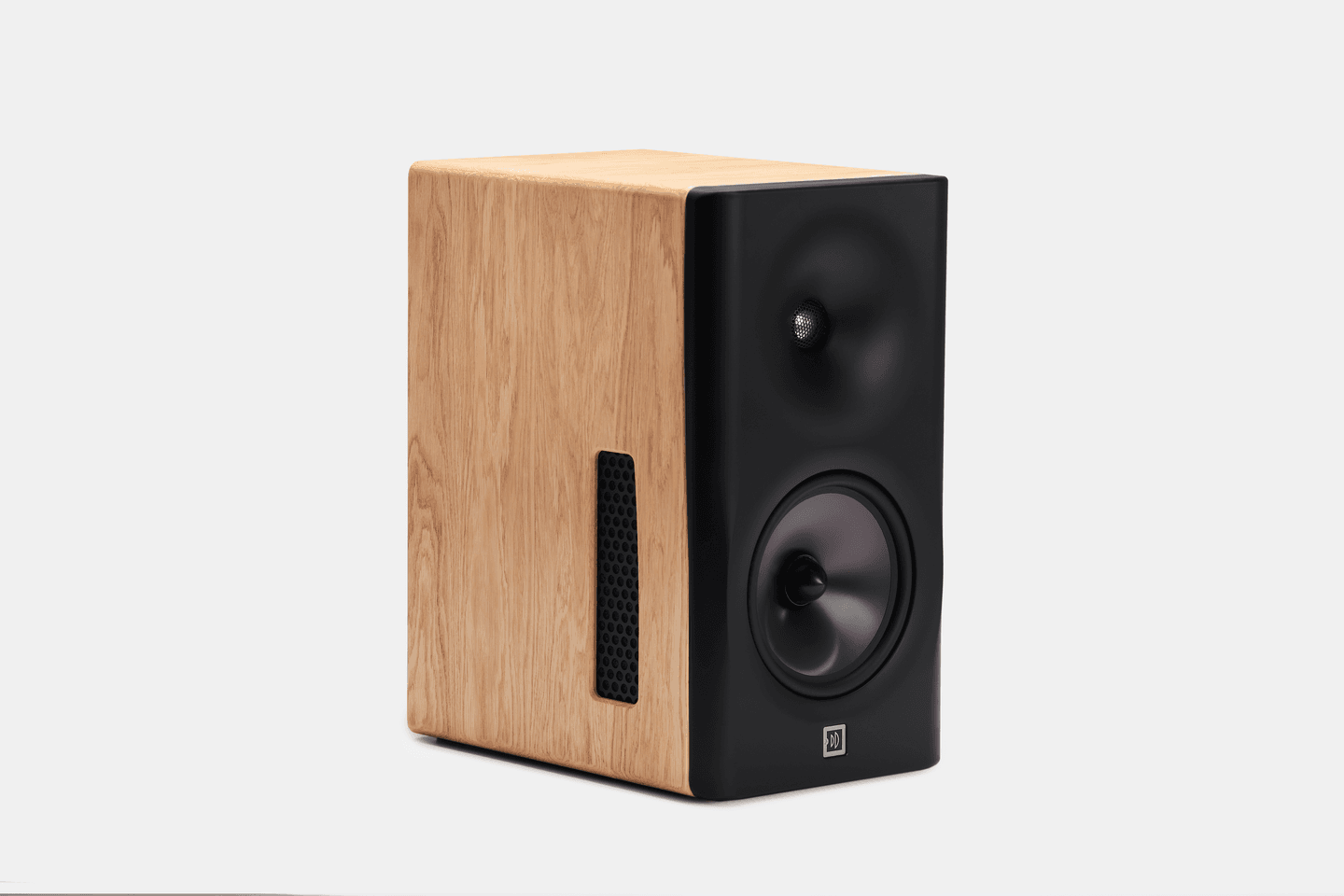
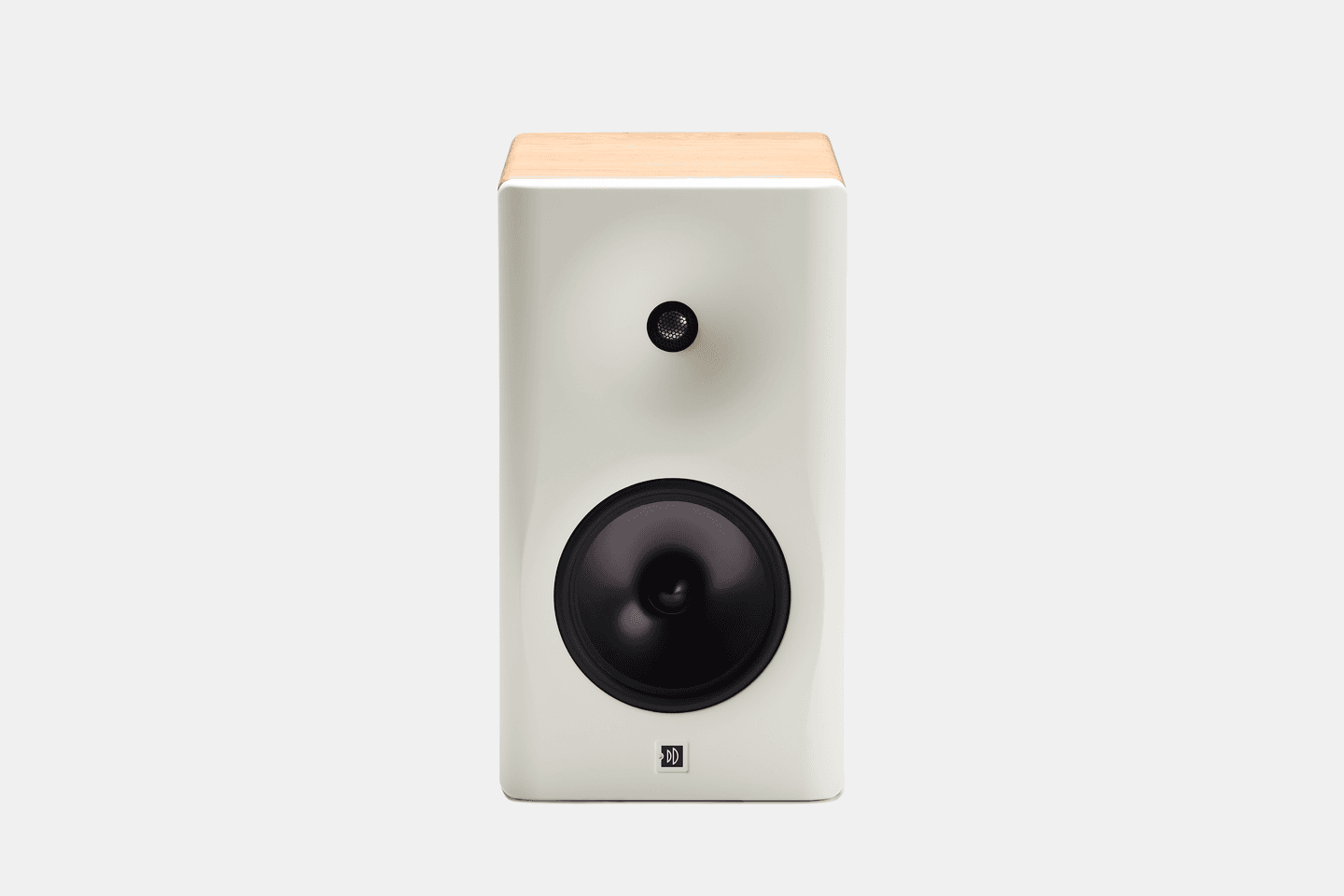
The Dutch & Dutch 8c: four drivers, three dedicated amplifier channels, and sophisticated DSP - all in one enclosure.Active integration eliminates the passive crossover and separate amplifier from the signal chain - reducing component count, interface losses, and opportunities for distortion.
The Technical Advantages of Active Design
Amplifier-Driver Matching
When designers build an active speaker, they select each amplifier to perfectly match the electrical and mechanical characteristics of the driver it powers. A woofer handling deep bass might need 500 watts to maintain control at high excursion, while a tweeter reproducing delicate high frequencies may only need a fraction of that power. In an active system, each amplifier is optimized for its specific driver's impedance curve, sensitivity, and power requirements.
With passive speakers, a single amplifier must simultaneously drive drivers with very different impedance profiles. The resulting compromises in damping factor, current delivery, and headroom across the frequency range are unavoidable.
Phase-Coherent Crossovers
The crossover is arguably the most critical - and most compromised - part of any multi-driver loudspeaker. Passive crossovers using physical components are inherently limited in the filter shapes they can achieve. Steeper slopes require more components, which add insertion loss and phase rotation. Achieving a truly phase-coherent crossover with passive components alone is extremely difficult and expensive.
Active crossovers, whether implemented in analog electronics or (increasingly) in the digital domain, can achieve precise filter characteristics that passive networks simply cannot. A 4th-order Linkwitz-Riley crossover - the professional standard - provides steep 24 dB/octave slopes while maintaining perfect phase alignment between drivers at the crossover point. The result is seamless integration between drivers with no audible discontinuity as sound transitions from one driver to the next.
Phase shifts in crossover networks affect the wave shape of transient attacks and can smear stereo imaging. As other distortions in a system are minimized, phase accuracy becomes increasingly important - and increasingly audible.
DSP Integration
Modern active speakers go beyond simple crossover filtering. With a built-in DSP engine, designers can implement driver linearization to compensate for a driver's natural response deviations, time-alignment to correct for the physical offset between drivers, room boundary compensation, and even advanced spatial processing.
This level of correction happens before the signal reaches the amplifiers, operating on pristine line-level audio. Each adjustment is precise, repeatable, and tailored to the exact acoustic behavior of the drivers and enclosure - something no external processor can achieve without intimate knowledge of the speaker's internal characteristics.
System Simplification
There's a practical elegance to active speakers as well. Instead of assembling a system from separate components - source, preamplifier, power amplifier, speaker cables, passive speakers - an active speaker needs only a source and a signal cable. Fewer connections mean fewer potential points of failure, less cable-induced signal degradation, and a dramatically simpler signal path from recording to ear.
Why Studios Made the Switch
Professional studios need to hear exactly what's in a recording - no flattery, no coloration, no surprises. When a mix engineer makes a decision about the balance between a kick drum and a bass line, or the precise placement of a vocal in the stereo field, the monitors must reproduce those relationships faithfully.
Active monitors became the studio standard because they deliver measurably flatter frequency response, tighter time-domain behavior, and more consistent performance across units. When every speaker rolling off the production line contains the same amplifiers, crossovers, and DSP corrections calibrated to the same driver set, unit-to-unit consistency is far tighter than any combination of passive speakers and external amplifiers could achieve.
“Well-designed active speakers can achieve far higher standards of accuracy and fidelity than passive systems. Active crossovers operating at line level allow for greater phase and amplitude accuracy and steeper filter slopes.”
- Sound On Sound
This is why you'll find active monitors from the smallest project studios to facilities like Abbey Road and Capitol Records. The technology isn't just convenient - it's acoustically superior.
The Dutch & Dutch 8c: Active Design Taken to Its Logical Conclusion
The Dutch & Dutch 8c is a compelling example of what's possible when the active speaker philosophy is pursued without compromise. Named The Absolute Sound's 2025 Integrated System of the Year, the 8c packs four drivers and three dedicated Class D amplifier channels - 500 watts for low frequencies, 250 watts for midrange, and 250 watts for high frequencies - into a beautifully finished enclosure.
The 8c uses two 8-inch woofers, an 8-inch midrange, and a 1-inch tweeter - each with dedicated amplification.
The crossovers are 4th-order Linkwitz-Riley with linear phase characteristics, set at 100 Hz and 1250 Hz. But the 8c goes further than most active speakers in two critical ways.
First, it achieves a cardioid dispersion pattern from 100 Hz upward. Most speakers radiate sound omnidirectionally at lower frequencies, which means your room's back wall and side walls contribute heavily to what you hear. The 8c's rear-firing woofer configuration actively cancels the backward radiation, dramatically reducing the room's influence on the sound. This means less room treatment is needed and more consistent performance across different environments.
Second, the 8c's built-in DSP platform is powerful enough to run third-party processing plugins. It was the first loudspeaker to integrate Dr. Edgar Choueiri's BACCH crosstalk cancellation technology, which extracts spatial information from stereo recordings that conventional playback normally obscures. This kind of integration is only possible because the 8c's designers control the entire signal chain from input to acoustic output.
The Dutch & Dutch 8c connects via Ethernet for networked audio and configuration, AES3 digital input for bit-perfect signal transfer, and balanced analog XLR. With DSP-controlled subwoofer outputs, it can also serve as the hub of a larger system.
Common Objections - and Why They're Outdated
Some audiophiles resist active speakers because they value the ability to mix and match amplifiers and speakers. This is a valid preference, but it's worth understanding what you trade away. A separate amplifier cannot be optimized for a specific driver's impedance and sensitivity characteristics the way a built-in amplifier can. And no external crossover - analog or digital - can be tuned as precisely as one designed with complete knowledge of the drivers and enclosure acoustics.
Another common concern is serviceability: if an amplifier fails in an active speaker, you can't simply swap in a replacement from another brand. In practice, modern Class D amplifier modules are extremely reliable - they run cool, have no tubes to wear out, and are designed for continuous professional use. And manufacturers like Dutch & Dutch provide long-term service support for their products.
The Bottom Line
Active speakers aren't just a trend - they represent a more fundamentally sound approach to loudspeaker design. By integrating amplification, crossovers, and signal processing into a single, precisely calibrated system, they eliminate the compromises inherent in assembling a system from separate components.
At Callens Audio Labs, I set up and calibrate every Dutch & Dutch 8c system personally, using the same signal-processing principles I studied at EPFL and refined over a decade of music production. If you're curious about what a properly configured active speaker system sounds like in your own space, I'd love to arrange a demonstration in Lausanne. The difference isn't subtle.
Related articles
Ready to hear the difference?
Get in touch and experience what you've been reading about.
active speakersamplificationDutch & DutchDSPcrossovers