10 Tracks to Test Your Speakers: A Curated Listening List
From jaw-dropping bass to holographic imaging, these ten tracks will reveal exactly what your speakers can - and can't - do. Grab your favorite format and press play.
Paul Callens
Founder, Callens Audio Labs
After years of producing music in the studio and demoing loudspeakers for clients, I've built up a personal playlist of tracks that I reach for every single time I evaluate a system. These aren't just songs I love - though I do love them - they're precision tools. Each one probes a specific dimension of audio reproduction, and together they paint a comprehensive picture of what a speaker can deliver.
Whether you're auditioning a new pair of speakers, fine-tuning your room setup, or just curious about what separates good from great, these ten tracks will sharpen your ears. I've chosen them to cover a wide range of genres, recording styles, and technical challenges - because the best speaker isn't the one that sounds good on one track. It's the one that sounds honest on all of them.
For the best results, use lossless or high-resolution formats. Stream from Tidal or Qobuz if possible, or use CD-quality FLAC files. Compressed MP3s and low-bitrate streams will mask the very details you're trying to evaluate.
Bass Extension & Control
1. Massive Attack - "Angel" (Mezzanine, 1998)
If you want to know whether a speaker can handle low-frequency content with authority and composure, "Angel" is non-negotiable. The track is built on the interplay between a kick drum and two distinct bass lines - a gritty, distorted synth bass that opens the song and a cleaner sub-bass that slides in about twenty seconds later. As the track builds, layers of reverb-drenched instrumentation pile on top, and this is where lesser systems fall apart. The bass turns to mud, the kick loses definition, and the vocal gets swallowed.
What to listen for: Can you clearly distinguish the two bass lines from each other and from the kick? Does the low end maintain its shape and texture as the arrangement grows more complex? On a truly capable full-range speaker, the opening minutes of this track feel physical - you don't just hear the bass, you feel it pressing into the room. Mixed by Mark "Spike" Stent at Olympic Studios, it's one of the finest bottom-end reference tracks ever committed to tape.
This one might surprise you. "Fast Car" doesn't scream bass test, but it's a favourite among acoustical engineers - including the team at Harman International - for a reason. The acoustic bass guitar sits prominently in the mix, and its warm, round tone occupies a critical range where many speakers begin to struggle. On systems with poor bass control, the bass bleeds into the vocal register and causes a subtle modulation - Chapman's voice starts to waver when the bass hits hard notes.
What to listen for: Does the vocal remain steady and clear even when the bass line is at its most prominent? Is the plucked bass guitar articulate, with each note having a distinct attack and decay? This track rewards speakers that have tight, well-damped low-frequency response rather than boomy quantity.
Vocal Clarity & Presence
3. Holly Cole - "I Can See Clearly Now" (Temptation, 1995)
Holly Cole's jazz trio recordings are staples of hi-fi demonstrations for good reason. This particular track features only voice, upright bass, and piano in an intimate, minimal arrangement that leaves nowhere to hide. Every breath, every lip movement, every micro-dynamic inflection in Cole's voice is laid bare. The upright bass has incredible weight and presence, and the piano occupies its own clearly defined space in the mix.
What to listen for: Listen for rattles, buzzes, and resonances. Because the recording is so clean and simple, any cabinet vibration or port noise from the speaker will become immediately obvious. Pay attention to how naturally the voice sits between the instruments - it should feel like Cole is standing right in front of you, with the bass slightly behind and to one side.
Critical listening starts with the right room. A well-calibrated system reveals every detail in a recording.
4. Rebecca Pidgeon - "Spanish Harlem" (The Raven, 1994)
I hesitated to include this one because it's almost a cliché in audiophile circles - but it earned that status for a reason. Recorded by Chesky Records using their proprietary 128× oversampling process and vacuum-tube equipment, the spatial information captured in this track is extraordinary. Pidgeon's voice is placed dead centre with uncanny precision, while a guitar sits close to her, bass and piano occupy the rear of the soundstage, and strings are spread across the sides - violin left, viola right. A shaker with natural reverb tail sits far right, defining the edges of the recorded space.
What to listen for: Can you pinpoint each instrument's location with your eyes closed? Listen for the squeak of fingers sliding on guitar strings, the tiny mouth sounds in the vocal - these micro-details tell you everything about a speaker's resolving power. If the imaging collapses into a flat plane between the speakers, you're leaving performance on the table.
Imaging & Soundstage
5. Yosi Horikawa - "Bubbles" (Wandering, 2012)
This is the track that makes people look behind them. Japanese electronic producer Yosi Horikawa creates music from manipulated field recordings - literal bubbles, water droplets, crackling sounds - and places them in a meticulously crafted three-dimensional space. On a well-set-up system, the sounds don't just emanate from the speakers. They spill out into the room, wrapping around you in a way that feels almost surround-like from a stereo pair.
What to listen for: How far outside the speaker boundaries does the soundstage extend? Do the percussive bubbles have distinct positions in space, or do they cluster vaguely in the middle? This track is my go-to for demonstrating what proper speaker placement and room calibration can achieve. When it's right, it's a "how is this stereo?" moment.
When evaluating imaging, sit in the sweet spot and close your eyes. Your brain will lock onto spatial cues more precisely when visual information isn't competing. Move your head slightly - a great system will hold its image even off-axis.
6. Cowboy Junkies - "Sweet Jane" (The Trinity Session, 1988)
Recorded in a single session at the Church of the Holy Trinity in Toronto using a single Calrec Ambisonic microphone, this album captures a real acoustic space like almost nothing else. "Sweet Jane" is the standout for testing because Margo Timmins' breathy vocal floats in the centre of an enormous, palpable reverberant space. You can hear the church - its walls, its ceiling, its dimensions - in every note.
What to listen for: Does the recording sound like it takes place in a real room, or does it collapse into a flat, studio-like presentation? The three-dimensionality of the venue is what separates a resolving speaker from a merely adequate one. Listen to how the guitar and harmonica trail off into the reverb - each should decay naturally, fading into the space of the church rather than cutting off abruptly.
Dynamics & Transient Response
7. Steely Dan - "Aja" (Aja, 1977)
The title track from one of the most celebrated recordings in pop music history. Steve Gadd's legendary drum solo - recorded in a single take - is a masterclass in transient clarity and dynamic nuance. The cymbals shimmer with overtones, the snare has a crisp, woody crack, and the toms resonate with natural sustain. Around the drums, the horn section punches through with brass that should sound burnished and warm, never harsh or brittle.
What to listen for: Does the drum solo feel alive and visceral, or does it sound compressed and lifeless? Pay attention to the cymbal decay - it should trail off with a natural shimmer, not a grainy hiss. The recording quality here is reference-grade, so if something sounds off, it's the speaker, not the source.
“Aja remains one of the touchstone recordings in popular music - its sonic clarity and spatial precision make it a reference point against which playback systems can be judged.”
- Stereophile
8. Nils Frahm - "Says" (Spaces, 2013)
Recorded live over the course of thirty concerts, "Says" builds from a delicate, intimate piano figure into an overwhelming wall of synthesizer sound. It's a study in macro-dynamics - the journey from near-silence to full-scale onslaught. Frahm works almost entirely with analog equipment and has a deep obsession with transient response, once saying, "I just want it to be transient, crisp, but also not sound lifeless." You hear that philosophy in every note.
What to listen for: Can your system preserve the delicate touch of the piano in the opening minutes and then handle the massive crescendo without compression or distortion? The transition should feel like the floor dropping out beneath you. Also listen for the audience sounds and room ambience in the quieter passages - a resolving speaker will place you in the concert hall.
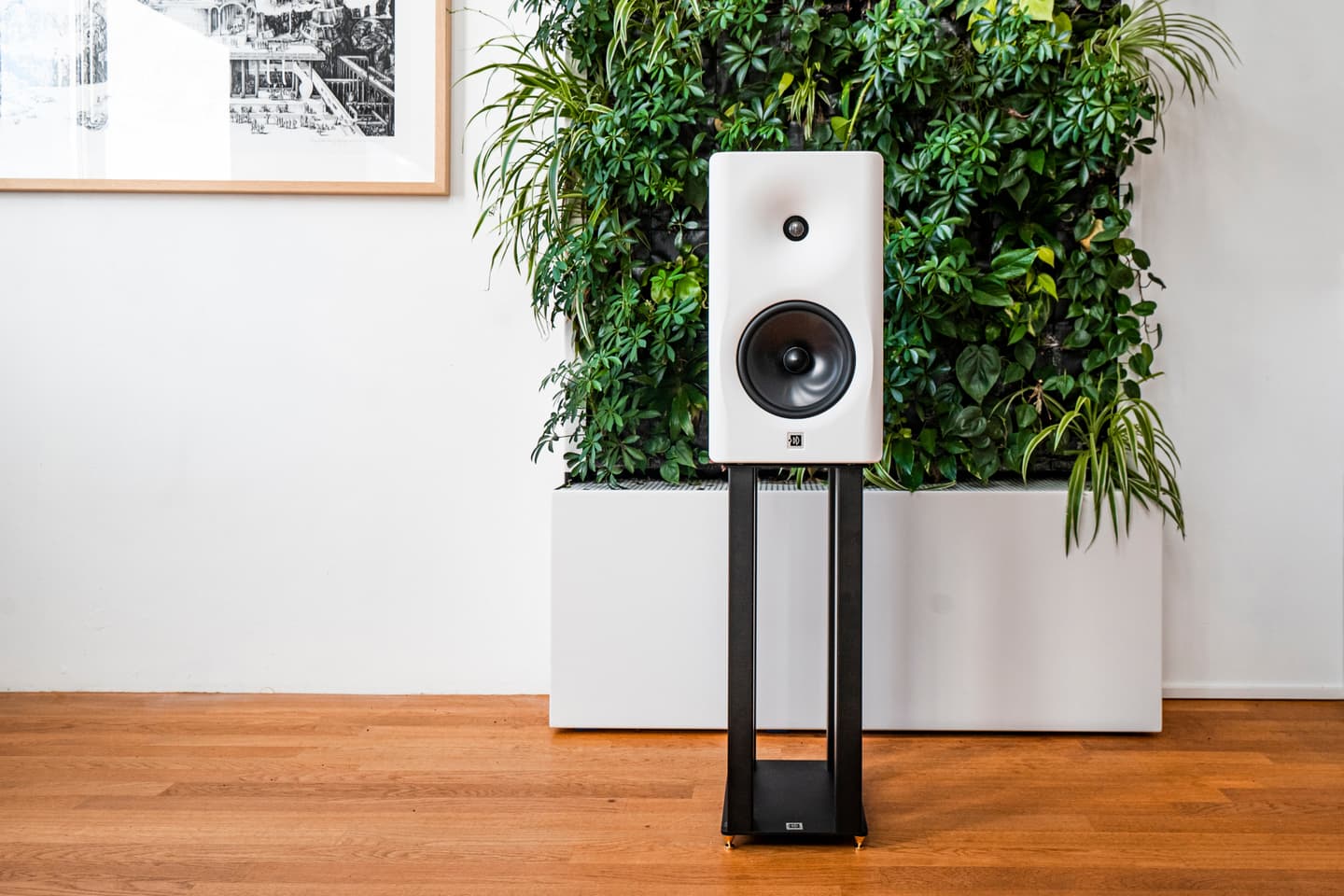
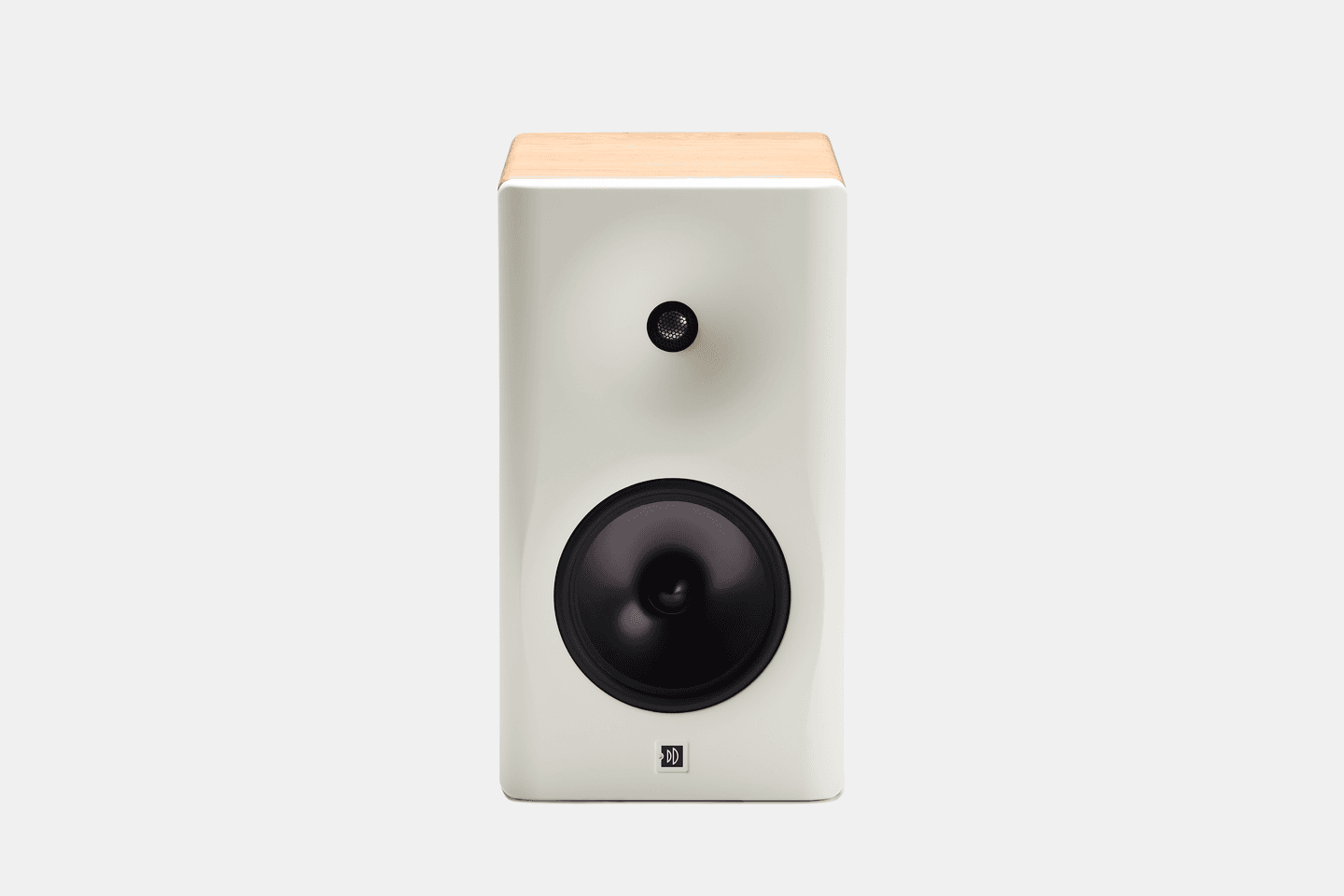
Full-range active speakers like the Dutch & Dutch 8c handle these test tracks with authority, from the deepest bass to the finest micro-details.
Detail & Texture
9. Radiohead - "Everything in Its Right Place" (Kid A, 2000)
An unusual pick for an audiophile list, but one I feel strongly about. Nigel Godrich's production on Kid A is dense, layered, and full of subtle textures that reveal themselves gradually on better systems. The opening Fender Rhodes chords are processed through a granular vocoder, and the way they shimmer and fragment is deeply dependent on your speaker's ability to resolve fine harmonic detail. Thom Yorke's vocal is chopped, layered, and panned across the stereo field in ways that demand precise channel separation.
What to listen for: Can you hear the individual grains in the vocoder processing, or does it wash together into a homogenous texture? Do the layered vocal fragments maintain distinct positions, or do they blur? This is a track where every step up in speaker quality reveals a new hidden detail you hadn't noticed before - the hallmark of a truly well-engineered recording.
I always include a modern production on my test list because great speakers need to handle contemporary music with the same authority as vintage reference recordings. The opening track of To Pimp a Butterfly is a sonic fireworks display - Thundercat's elastic bass guitar, layers of funk guitar, George Clinton's voice, dense vocal harmonies, and Kendrick's flow all coexist in a mix that's both maximalist and surprisingly transparent. It was mixed by Derek "MixedByAli" Ali, and every element has its own pocket in the frequency spectrum.
What to listen for: Can your speakers separate Thundercat's acrobatic bass from the kick drum? Does the mix feel spacious and layered despite its density, or does it congeal into a wall of sound? Pay attention to the tonal contrast between George Clinton's weathered voice and Kendrick's sharper delivery - they should sound like two very different human beings, each occupying a distinct space. This track punishes speakers with poor midrange resolution and rewards ones that can handle complexity.
Building Your Own Reference Playlist
These ten tracks are my personal toolkit, refined through hundreds of listening sessions and demo appointments. But here's what I always tell clients: the most important test track is one you already know intimately. A song you've listened to five hundred times on every system you've owned - because that familiarity is irreplaceable. You know how it should sound, and you'll immediately hear what's different.
Start with tracks you know deeply, then explore the ones on this list
Listen at moderate volume first - you'll hear more detail than at extreme levels
Give yourself time: snap judgements favour bright, punchy speakers; extended listening rewards balance and naturalness
Switch between genres - a speaker that excels at jazz but falls apart on electronic music has a problem
Trust your instincts: if something sounds fatiguing or "off" after twenty minutes, it probably is
Hear the Difference for Yourself
At Callens Audio Labs, every demo session is personal. Bring your own playlist - your reference tracks, your guilty pleasures, the song that made you fall in love with music - and we'll play it on a properly calibrated system in our listening space in Lausanne. I'll walk you through what to listen for, and more importantly, I'll let you hear for yourself what's possible when the speakers, the room, and the recording all come together.
Because at the end of the day, all the specs and measurements in the world are just numbers. The moment that matters is when you sit down, close your eyes, press play - and the music moves you.
Related articles
Ready to hear the difference?
Get in touch and experience what you've been reading about.
test tracksaudiophilecritical listeningreference recordingsmusicdemo