Room Acoustics 101: How Your Room Shapes What You Hear
Your room is arguably the most important component in your audio system. Understanding how sound behaves in enclosed spaces is the first step toward better listening.

Callens Audio Labs
Ask me anything
Hi! How can I help?
Ask about our speakers, services, demos, or anything else.
Powered by AI · May make mistakes · Paul is always available
Before you cover your walls in foam, let's talk about what acoustic treatment actually does - when it matters, when it doesn't, and how modern speaker technology is changing the equation.

Walk into any audiophile forum and you'll find the same advice repeated like scripture: treat your room. Buy panels. Cover the first reflection points. Add bass traps in every corner. And while none of that is wrong exactly, it paints an incomplete picture - especially for people who listen in real living spaces rather than purpose-built studios. The truth is more nuanced, and understanding it can save you both money and domestic harmony.
As someone with a background in signal processing and acoustics, I find myself having this conversation with nearly every client. So let's walk through what acoustic treatment actually does, the different types available, and - most importantly - how much of it you really need in a modern domestic setup.
When a speaker plays music in a room, you don't just hear the direct sound from the drivers. You also hear every reflection - sound bouncing off walls, the ceiling, the floor, furniture, and windows. These reflections arrive at your ears milliseconds after the direct sound and interfere with it, sometimes constructively (making certain frequencies louder) and sometimes destructively (cancelling them out).
At low frequencies, the room creates standing waves - resonant modes where bass builds up in some spots and virtually disappears in others. Sit in one chair and the bass sounds enormous; move a meter to the left and it thins out completely. This isn't your speakers misbehaving. It's physics.
Acoustic treatment aims to tame these effects. But different problems require different solutions, and the most common mistake is applying the wrong treatment to the wrong problem.
Absorptive panels convert sound energy into heat as it passes through a porous material - typically mineral wool, fibreglass, or open-cell foam. They're most effective at mid and high frequencies, where wavelengths are short enough to interact with panels of practical thickness. A standard 5 cm panel will absorb frequencies above about 500 Hz quite well, but it won't touch a 60 Hz room mode.
Bass traps are essentially thick absorbers - often 10-15 cm deep or more - placed in corners where low-frequency energy accumulates. Corners are where three room boundaries meet, and standing waves reach their maximum pressure. Well-placed bass traps are, dollar for dollar, the single most impactful acoustic treatment you can add to a room.
Diffusers scatter sound rather than absorb it. Instead of removing reflections entirely, they break them up into many smaller reflections arriving from different directions. This preserves the room's sense of spaciousness and liveliness while reducing the harsh, focused reflections that cause problems like comb filtering and flutter echo.
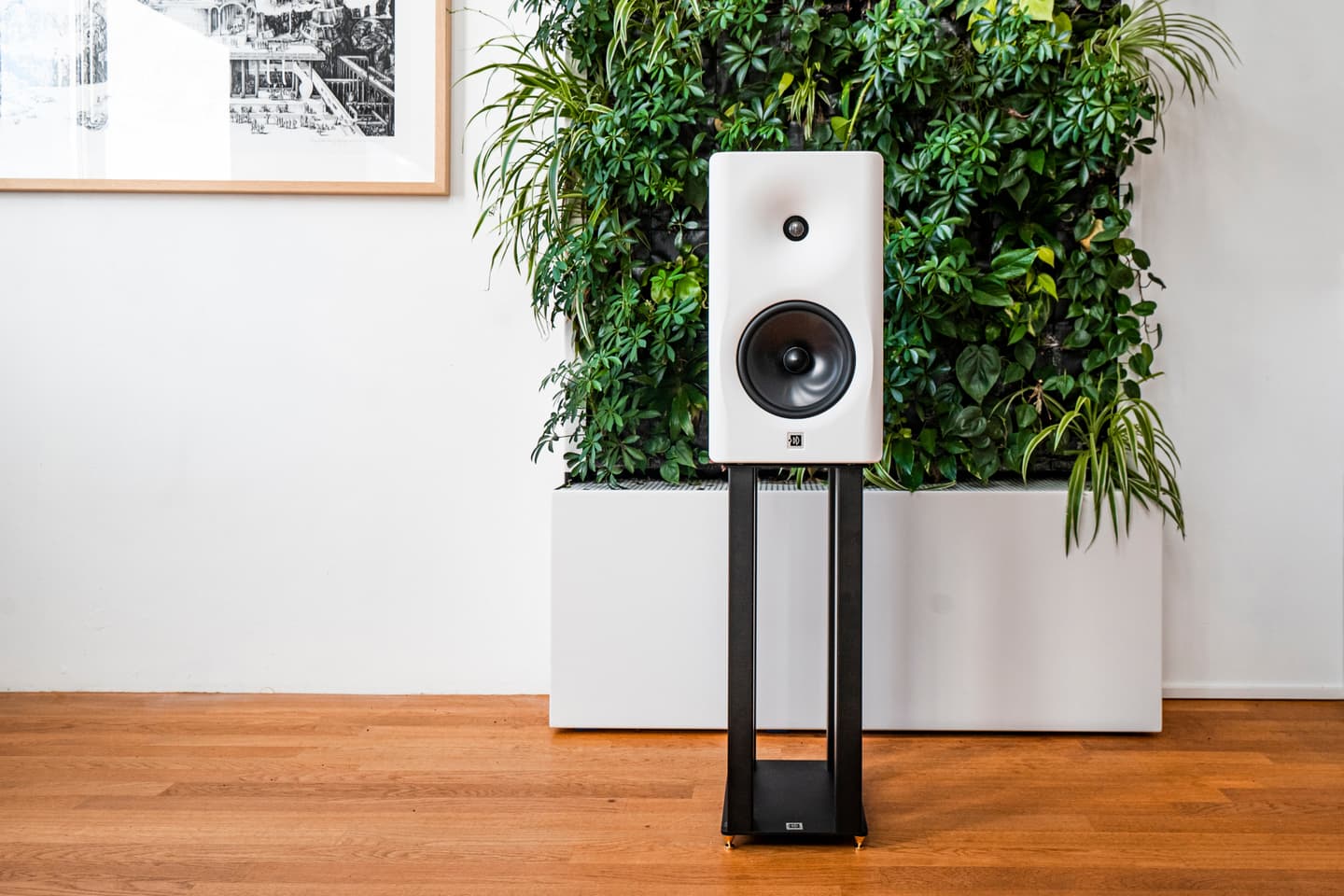
If you're going to treat anything, start with the first reflection points. These are the spots on the side walls, ceiling, and floor where sound from the speakers bounces directly toward your listening position. Because these reflections arrive just a few milliseconds after the direct sound, they cause the most audible interference - smearing the stereo image and adding a harsh, confused quality to the midrange.
Finding them is simple: sit in your listening position and have someone slide a mirror along the wall. Wherever you can see the reflection of a speaker driver in the mirror, that's a first reflection point. Treating these spots - typically with 5-10 cm absorptive panels - tightens imaging, cleans up the midrange, and brings a clarity that's immediately apparent.
This is the most widespread error, and it produces the opposite of the intended effect. Covering every wall with thin foam panels absorbs mid and high frequencies efficiently but does nothing for bass. The result is a room that feels oppressively dead in the upper frequencies while the low end remains boomy and uncontrolled. The balance shifts completely, making music sound dull and lifeless.
The goal of treatment is never silence - it's balance. A well-treated room should still feel alive and natural. If your treated room sounds worse than an untreated one, you've almost certainly over-absorbed the upper frequencies without addressing the low end.
Placing panels on random walls or wherever they happen to fit aesthetically does very little. Acoustic treatment is location-specific: first reflection points, corners for bass traps, and the rear wall for diffusion. A single well-placed panel does more than a dozen poorly placed ones.
In a recording studio, heavy treatment is expected and desirable. In a living room - where you also read, entertain, and live - it's a different matter. Covering 60% of your wall surface in panels will make the space uncomfortable for everything except critical listening. Domestic spaces need a lighter touch, and the good news is that modern speaker technology makes that lighter touch entirely viable.
“The room is the most important component in any audio system. No amount of equipment upgrades can overcome a fundamentally problematic acoustic environment.”
- Floyd Toole, Sound Reproduction (Focal Press)
Here's where things get interesting for domestic listeners. Traditional passive speakers radiate sound in all directions - especially at low frequencies, where the radiation pattern is essentially omnidirectional. This means they excite every room mode and bounce off every surface with equal intensity. The room becomes a dominant part of the sound, for better or worse.
Modern active speakers with DSP-based room correction are fundamentally different. They can measure the room's acoustic response and apply corrective filters in real time, compensating for the peaks and dips caused by standing waves and boundary reflections. This is particularly effective below 500 Hz, precisely where physical treatment is hardest and most expensive to implement.
Speakers like the Dutch & Dutch 8c take this further with controlled directivity. By shaping the radiation pattern itself - sending less energy toward the side walls and rear - they reduce the room's influence on the sound at the source, before any digital correction is even applied. The cardioid bass design actively cancels rear radiation, meaning the low frequencies that typically cause the worst room problems are dramatically reduced.
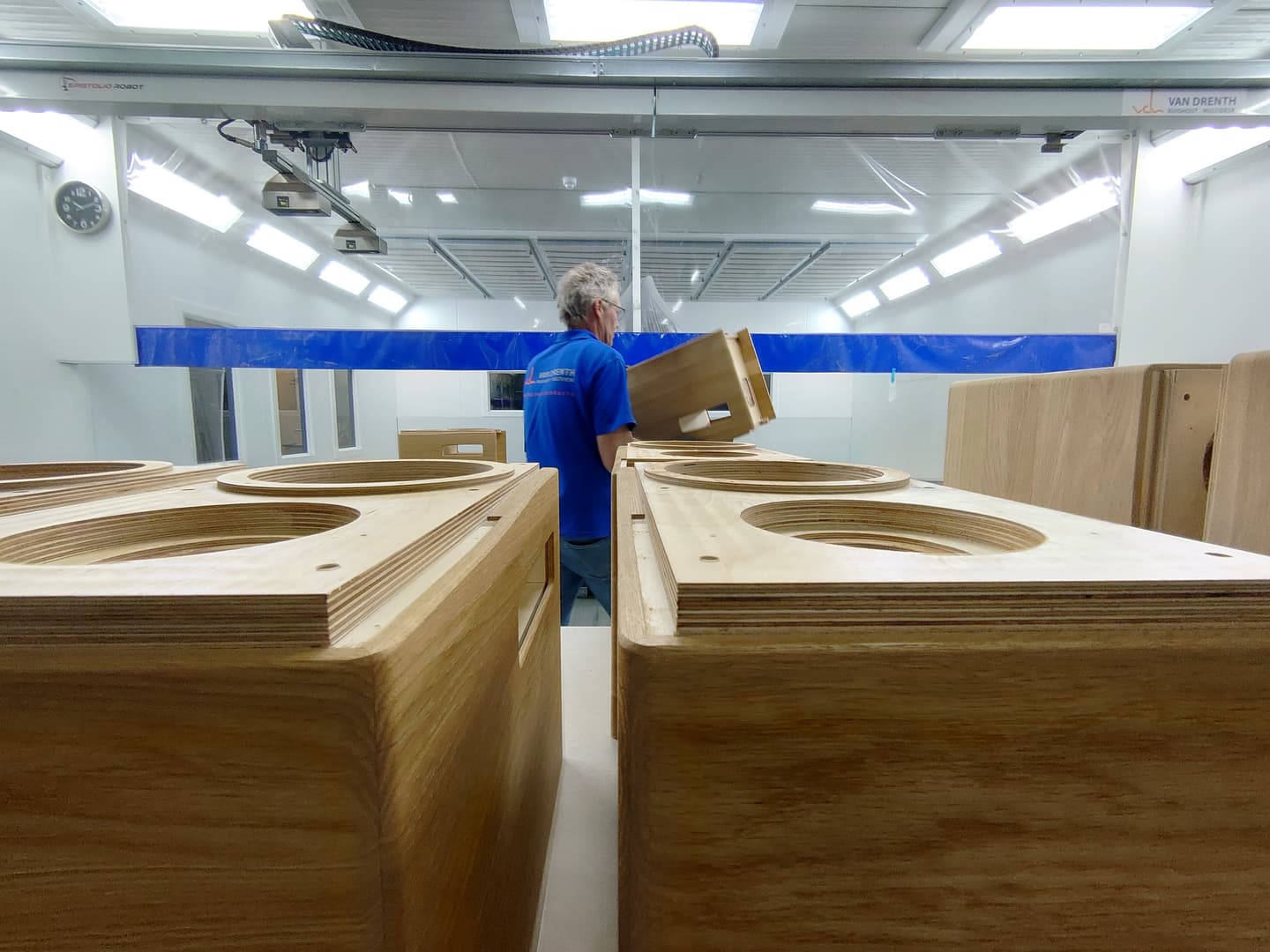
The practical upshot? A room with controlled-directivity speakers and proper room correction may need little to no additional acoustic treatment to sound exceptional. The technology handles the bass management that would otherwise require enormous corner traps, and the directional midrange reduces early reflections that would normally demand wall panels.
So what should you actually do? It depends on your speakers, your room, and how far you want to go. Here's a pragmatic approach:
Acoustic panels aren't snake oil - they solve real problems when applied correctly. But they're also not universally necessary, and they're certainly not the only solution. The acoustics landscape has shifted. With modern active speakers offering controlled directivity and sophisticated room correction, the amount of physical treatment a domestic room needs has decreased dramatically.
At Callens Audio Labs, every setup I do begins with the room. I measure, listen, and work with the space as it is - because the best system is one that sounds extraordinary in your actual room, not one that requires you to live in a padded box. If you're curious about what your room really needs (and what it doesn't), book a demo and let's figure it out together.